Showing posts with label job interview. Show all posts

Tuesday, 15 November 2011

What Hi-Fi?


As a music obsessive, I was thrilled to get an interview at What Hi-Fi?, until I read the magazine. It’s full of quotes I didn’t understand:
“This system attacks tracks with a playful excitement”; “It balances refinement, insight and attack perfectly and has the composure to make instrumental strands easy to follow”; “the HRT Music Streamer II gives the music more room to breathe, sounding bigger and more powerful as a result.”

What does any of this mean? I really don’t think my ears are sensitive enough to pick up these things. I have no experience with high-end soundsystems. The only CD player I’ve ever owned is a £100 Panasonic Power Blaster I got when I was about ten.


Though my Panasonic sounds great to me, reading the magazine makes me feel like I need to buy some £1,500 kit which can create a ‘holographic stereo image’.

Thus, slightly intimidated, I go to their offices in Teddington for the interview. There are delays on the trains, but these speed me up, as I catch services which were meant to have left before I arrived.

When I meet the editor, my first question is obviously ‘what CD player do you have?’ I forget the details almost immediately. It sounds expensive.

The editor seems a really nice guy, and doesn’t ask me any tricky questions. It feels more like a chat than an interview:
“So, have you been applying for many other jobs?”
“Yeah, actually I’ve got an interview tomorrow at Poultry World.”
“That reminds me of the time I narrowly avoided having to do a week’s work experience for European Plastics Monthly.”

Apparently, European Plastics Monthly has been rebranded.
Clearly, it worked.


He asks what kind of music I like, and I ask him the same. He listens to anything from Bach chamber pieces to modern electro. The magazine’s writers all seem to have a broad taste:
“The B&Ws are just as happy churning out Tom Waits’ I DON’T WANNA GROW UP as they are unpicking Dimitri Shostakovich’s SYMPHONY NUMBER 3 ‘1ST OF MAY’”; “The A26’s insight into recordings as diverse as Tchaikovsky’s 1812 OVERTURE and Adele’s 21 is impressive at this price level”... etc

After the interview, the editor gives me a guided tour of the test rooms. We walk into the Hi-Fi room, and a Beatles album is playing. Apparently, it takes about 50 hours of playing to ‘break in’ a CD player, so they just leave them running.
Doin Thangs: a good test of any Hi-Fi

I ask the editor whether the recording quality of 60s music is good enough to properly test high-end kit. He says it often is. The best quality recordings come from one person alone in a room, playing into a single microphone, recording straight onto tape. Some 80s music is much worse for sound quality, because they used a lot of compression for instruments, he says, giving Madonna as an example. I have an alternative theory about why Madonna records sound so bad, but keep it to myself.


Before the interview, the editor asked me to write a review in the What Hi-Fi? style, and bring it with me. Here’s what I wrote:
Review: Panasonic RX-DS27, £100 (now out of production), *****
This is a brilliant no-nonsense CD system. Other than volume and track number, the only thing you can change is the EQ. This has five settings, none of which, in my experience, sounds better than the first: ‘EQ-OFF’.

The main reason you should have bought one of when they were still being made is because they’re built to last. Mine is still going strong, even though I once dropped it onto a hard wooden floor, putting a big dent in the mesh of the right-hand speaker. True, the tape deck broke a few years ago, but if you still listen to tapes, why are you reading this magazine?

As for the sound quality, it’s never struggled with anything I’ve run through it. The RX-DS27 conveys the full horror of Captain Beefheart’s growling, dischordant rock, and handles Brian Eno’s ambient works equally well. It doesn’t try and clean up recordings; if there’s hiss on the record, you get hiss through the speakers. This might be praised as authentic or dismissed as annoying, according to your taste. Overall, though, the sound is excellent for this price.

The CD tray has an ingenious fold-out design; handily, you don’t need to turn it on to get CDs out. As an added bonus, it avoids the modern trend of trying to be ‘friendly’. My sister’s CD player (Sony 3MT-EP313) says ‘hello’ when you turn it on and ‘see you’ when you turn it off. I have human friends, and don’t need companionship from my CD player. In fact, the idea that it was even partly sentient would make me feel guilty about leaving it in the house alone all day. Thankfully, the RX-DS27 has never tried to communicate with me. Highly recommended.
I'm a plastic bag and I'm talking to you

I didn’t get the job, but I got a very nicely worded rejection letter, which was almost apologetic. Fair play.

Tuesday, 6 September 2011

Someone else

When you start chatting about David Bowie trivia, you know a job interview is going pretty well.
A few months ago an interviewer asked me about a claim on my CV: I make ‘an occasional profit buying and selling CDs online’, demonstrating my ‘commercial awareness’. I explained how I do it, without telling him how occasional and how small the profit is.


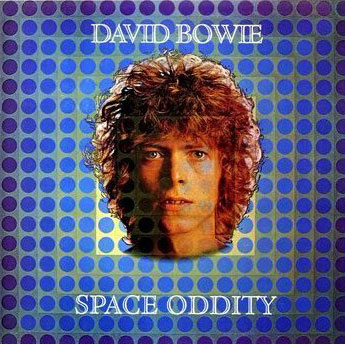
By an odd fluke, I had just bought an album from a charity shop, so I pulled it out of my jacket pocket and showed him. It was Bowie’s Space Oddity, and my interviewer was a fan. He asked which two Bowie songs mention Major Tom (answers at the end). I got them both, but not the job. Perhaps another candidate showed greater knowledge of Bowie’s Aladdin Sane character.


Last week, I got another interviewer talking about music. Again it wasn’t enough to win me the job, which this time was customer assistant at a health food shop.

The interviewer was about my age (22), and very friendly. She apologised in advance about her questions, explaining that some were quite stupid, but that they were chosen by head office. That put me at ease, so I gave pretty confident answers. Example: Why is it important for a shop to have staff with good sales skills?

Me:‘To sell more? That’s the point of running a company.”
Her: You’re the first person I’ve interviewed who’s said that!


I took that as a good sign. We both made plenty of eye contact and smiled a lot, except when I went on a mini-rant about a previous interview, and lost her for a while. In general she seemed to be on my side, and gently steered me towards a couple of right answers. One question was: How does the company make sure its staff know so much about the products they sell? She told me the question was ‘not as difficult as it sounds’, while subtly glancing towards the thick staff training manuals piled up on the desk. Another question asked me to describe myself in three words. Having got two, I was clearly struggling:

Her: Would you say you’re passionate?
Me: Yes!


I told her about my passion for music, and obsession with listening to an album the whole way through. She felt the same way. I told her a pointless anecdote about how my brother recently skipped a few songs on Electric Ladyland because they took a few seconds to get going. She actually seemed interested by this, maybe even sympathetic.

As she showed me out, we exchanged smiles and ‘nice to meet you’s, and I left feeling like I'd finally done enough to get the job. In my interviewing career, it was my best performance so far. I almost seemed employable. I even made a good attempt at being keen. It was the first time that I might have employed myself. However, I would then have offered myself a generous redundancy package, accepted it, and re-hired myself a week later on a higher wage, so it’s probably best that the decision wasn’t up to me.

Steven Wright has a much better version of the joke I just attempted: 
“I saw a sign at a gas station. It said ‘Help Wanted’. 
There was another sign below it that said ‘Self Service’. 
So I hired myself. Then I made myself the boss. 
I gave myself a raise. I paid myself. Then I quit.”
The following week, I got the call: “Just letting you know that we’ve hired...someone else.” Apparently I came across well. It was just that someone else came across better.

(The songs were Space Oddity and Ashes to Ashes.)

Thursday, 14 July 2011

Cover Letters

After five months' unemployment, I checked my email 'sent' folder. I'd sent over 100 applications, and been offered five interviews. I needed a new strategy.
A friend of mine, Mr B, was the man to ask. His experience and qualifications, in bullet points, just about fit onto the two pages of his CV. He came back from uni on Friday, and started a well-paying job on Monday.
In contrast, I pad out my single-page CV with plenty of detail about the few jobs I’ve held, and pointless background statements like: “I’m a keen CD collector.”
I've got a copy. So what?

Mr B quickly spotted a problem: my cover letter should be longer than 27 words.
He sent me an example letter by a friend of his, Mrs X. Apparently, it had gained her plenty of interviews which ‘she really shouldn’t have got’. It was a page long, and full of meaningless statements along the lines of ‘I like your company and want to work for you because what you do is interesting’.
Still, it was quite impressive, and helpful. I finally recognised that my cover letter should explain why I want to do the job, and why I’d be good at it. I’ve updated the letter. It was a bland list of what I’ve been doing for the past year. Now it’s a very immodest mini-essay
I’m keeping it to half a page, though. There were about 70 applications for each graduate job last year, according to a poll. If all cover letters are like Mrs X’s, before getting to the CVs, employers would have to wade through 20,000 words, the equivalent of a mini novel. I doubt employers would want to do this, especially if the novella has 70 unconnected characters and no plot.

Since updating my letter, I’ve sent seven applications, and been offered two interviews. The ratio is improving!

PS: a recent donation to Oxfam included: free tourist brochures, a file of Met Office documents, and a tooth in an envelope